


Why does fashion matter?
May 31, 2026Why does fashion matter? It is a creative, economic, and practical force. Blurring the lines between “fashion”, as in decisions of clothing style, and “clothing”, as in something to cover the body with, I would say that what you wear signals to others a lot of things at just one glance: how you’re feeling, how confident you are, if you’re feeling fun or serious (or want to be taken seriously or have some fun) if you want to blend into the background or have everybody you pass tun and look as you walk past.
Clothes sit closer to the body than almost anything else we choose each day. Fabric meets skin before conversation begins, before a voice carries across a room, before a handshake frames an impression. Dress signals intention without asking permission from language, which is why it can feel both immediate and difficult to control at the same time. People read silhouettes, colours, and textures in an instant, building stories about identity, taste, and belonging from fragments that might have been chosen in a rush. Fashion lives in that charged space between control and interpretation, where a shirt or jacket can hold meanings far beyond its material function. It offers a visible record of choices that might otherwise remain internal, giving form to taste, mood, and aspiration in a way that feels concrete even when it is constantly shifting.
Why does fashion matter?
Fashion matters because it translates complex social codes into something legible. Therefore it becomes a tool people use to navigate different environments without needing to articulate every intention out loud. In workplaces, for example, dress can signal competence or creativity depending on how closely it aligns with unspoken expectations, while in social settings it often acts as a shorthand for shared interests or values. However, these signals are never fixed, since what reads as polished in one context might appear overly formal or detached in another, which keeps fashion in a constant state of negotiation. People learn these codes through observation and participation, adjusting their choices as they move between groups, and this process turns clothing into a form of social literacy that develops over time.
Personal identity finds one of its most immediate outlets through dress. Clothing allows individuals to experiment with how they present themselves without requiring permanent change. A person might adopt different styles across a single week, trying on aesthetics that reflect shifting moods or ambitions, and in doing so they build a more nuanced understanding of their own preferences. Meanwhile, fashion offers a space where contradictions can coexist, since someone can blend elements that traditionally belong to different subcultures or eras, creating a look that resists simple categorisation. This flexibility makes fashion particularly relevant in a world where identities are increasingly fluid, and it allows people to engage with that fluidity in a tangible way that feels both creative and grounded.
Cultural History
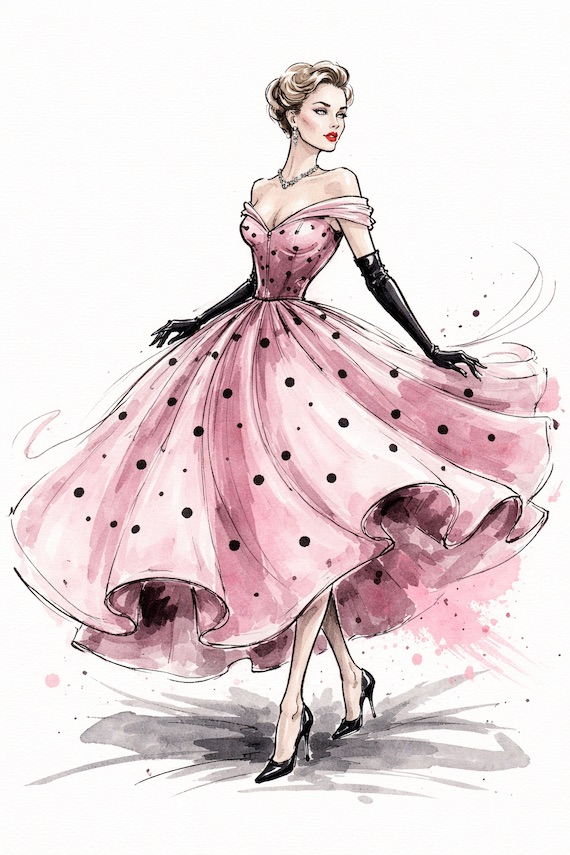
Why Does Fashion Matter? Image G Jones/AI
Cultural history is woven into garments. This means fashion also serves as an archive that records how societies evolve over time. Styles emerge from specific conditions, whether economic, political, or technological. They carry traces of those origins even as they are reinterpreted in new contexts. For instance, silhouettes associated with particular decades often reflect broader attitudes toward gender, labour, or leisure, and revisiting those styles can bring those attitudes back into conversation. Consequently, wearing certain pieces can feel like participating in a dialogue with the past, where references are recognised and reimagined rather than simply repeated. Fashion becomes a way of engaging with history that feels immediate and embodied, rather than distant or purely academic.
Economic systems rely heavily on fashion. The industry drives production, marketing, and consumption on a global scale, shaping how goods are made and distributed. Brands create narratives around their products. They encourage consumers to see clothing as more than functional items. This storytelling fuels demand that extends far beyond basic necessity. However, this dynamic also raises questions about sustainability and labour. The speed and volume of production often comes at significant environmental and human costs. As awareness of these issues grows, consumers increasingly use their purchasing decisions to express values, which adds another layer of meaning to what might otherwise seem like routine transactions. Fashion therefore becomes a site where ethics and aesthetics intersect in visible and sometimes conflicting ways.
Why does fashion matter?
Technology continues to reshape how fashion is produced and experienced. It introduces new materials, digital platforms, and modes of interaction that expand what clothing can be. Online spaces allow trends to circulate rapidly. This enables styles to gain global visibility within days rather than seasons. The acceleration changes how people engage with novelty and repetition. At the same time, innovations in fabric and manufacturing open possibilities for garments that respond to environmental conditions or integrate with digital devices. They blur the line between fashion and function. As a result, fashion becomes increasingly intertwined with broader technological shifts. It reflects and influences how people adapt to changing conditions in their daily lives.
Social belonging often hinges on visual cues. Clothing provides one of the most immediate ways to signal membership within a group or distance from it. People adopt shared styles to align themselves with communities. Whether those communities are defined by music, profession, or ideology, these choices help create a sense of cohesion. On the other hand, rejecting certain styles can be just as meaningful. It marks a deliberate separation from particular norms or expectations. This push and pull between conformity and individuality plays out through fashion in ways that are both subtle and overt. This makes it a constant negotiation rather than a fixed statement. Clothing becomes a language through which people express both connection and independence at the same time.
Why does fashion matter?
Ultimately, fashion matters because it sits at the intersection of expression, culture, and economy. It connects individual choices to broader systems in ways that are both visible and complex. It allows people to communicate without speaking. They can engage with history while living in the present. They can also navigate social environments with a degree of control that feels immediate yet always evolving. As trends shift and new influences emerge, fashion continues to adapt. It reflects changes in values, technologies, and identities that shape contemporary life. In that sense, it remains an essential part of how people understand themselves and each other, offering a medium that is as practical as it is expressive.
