


What’s the difference between goth and emo?
October 1, 2026What’s the difference between goth and emo? Black clothing fills both wardrobes, yet the similarities between goth and emo usually stop once the music starts, the references appear, and the attitude behind the outfit comes into focus for anyone paying attention beyond social media labels. Teen magazines spent years treating the two subcultures like interchangeable Halloween costumes. This flattened decades of history into a blurry mix of striped tights, dyed hair, and heavy eyeliner. It didn’t acknowledge the very different communities involved.
Difference between goth and emo
Table of Contents
Toggle
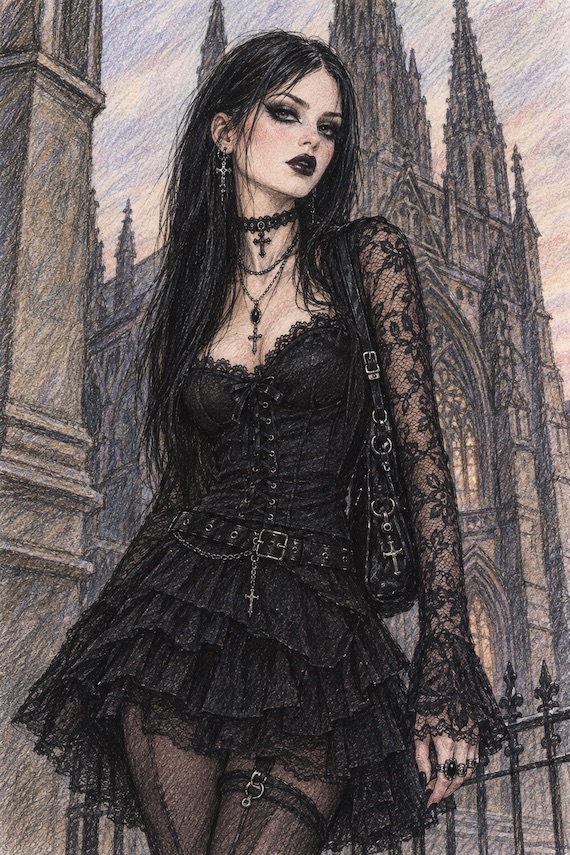
Goth girl. Image AI
Goth grew from post punk scenes in late seventies Britain. It carries influences from art school aesthetics, gloomy literature, underground clubs, and experimental music that prized atmosphere over emotional confession or teenage vulnerability. Emo arrived through hardcore punk circles in Washington DC during the mid eighties. Musicians turned aggressive political sounds inward and wrote songs about anxiety, heartbreak, confusion, and personal collapse with unusual directness for punk at the time. Fashion followed those musical differences very closely.
Goth style usually looks curated, layered, and theatrical. The culture values presentation as a creative act connected to performance, nightlife, romantic imagery, and references pulled from cinema, Victorian mourning clothes, fetish wear, and underground fashion photography. Emo fashion, however, leans more toward personal expression that appears accidental. Even when somebody has clearly spent an hour shaping their fringe into a gravity defying angle before leaving the house for a local gig.
One group often treats clothing like visual world building. Meanwhile, the other tends to use clothing as emotional shorthand for discomfort, frustration, awkwardness, or alienation inside ordinary suburban routines that feel crushingly repetitive during adolescence and early adulthood. Platform boots, lace gloves, dramatic coats, silver jewellery, and sharply structured silhouettes appear constantly in goth spaces. Because the look evolved through clubs where spectacle mattered almost as much as music. Emo outfits usually feel narrower and more casual.
Difference between goth and emo
Hair remains one of the most obvious visual markers separating the two subcultures. Internet nostalgia has blurred many details through recycled photographs that flatten years of evolution into one endless slideshow of black eyeliner and dramatic side fringes. Goth hairstyles frequently involve sculptural shapes, heavy backcombing, shaved sections, crimping, or elaborate styling influenced by punk experimentation and nightclub extravagance. This creates a deliberately artificial appearance that almost rejects natural beauty standards outright.
Emo hair, instead, became famous for asymmetrical fringes sweeping across one eye. They like straighter silhouettes, and styles designed to look emotionally charged without appearing fully theatrical or costume based. Both scenes enjoy hair dye and dark makeup. Moreover, goth makeup often looks sharper and more stylised with pale foundation, dramatic contouring, and graphic eyeliner. Emo makeup usually emphasises smudged eyes, tired expressions, and a deliberately vulnerable appearance tied closely to youth culture.
Cinema and television helped cement stereotypes that still follow both groups today. Particularly the lazy assumption that goth people are morbid intellectuals obsessed with cemeteries. While emo people spend every afternoon writing poetry about breakups beneath rain covered bus shelters. Those clichés ignore the humour present in both communities. Goth culture, for example, often contains a strong streak of camp theatricality, playful absurdity, and self awareness. Outsiders completely miss this because they focus only on the black clothing and dramatic makeup. Emo culture also receives unfair criticism for emotional openness.
Difference between goth and emo
However, many emo musicians wrote with unusual honesty about mental strain, loneliness, masculinity, and insecurity. This at a time when mainstream rock often rewarded emotional distance and performative arrogance instead of vulnerability. The mockery became particularly harsh during the mid two thousands. Tabloids blamed emo culture for everything from bad grades to social withdrawal despite offering little understanding of why emotionally direct music resonated so strongly with isolated teenagers. Media panic distorted public perception for years.
Age differences inside the scenes create another interesting contrast because goth communities frequently retain older members who continue attending clubs, collecting records, and refining their style well into middle age without treating the culture as a temporary teenage phase. Emo culture tends to skew younger. Partly because the music often captures periods of emotional volatility linked closely to adolescence, university years, unstable relationships, and the awkward transition into adulthood that many listeners eventually outgrow.
Plenty of adults still love emo music, obviously. Nevertheless, goth culture usually presents itself as a long term identity. It connects to art, nightlife, literature, and aesthetics that evolve gradually over decades. It doesn’t tend to fade once somebody reaches their late twenties and changes social circles. That difference affects fashion quality too. Goths often invest in carefully constructed wardrobes with durable pieces. Emo style historically embraced inexpensive band shirts, skinny jeans, hoodies, and DIY details shaped by accessible youth culture rather than polished presentation or historical references. Economics shaped the wardrobes as much as taste.
Not a Costume!
The easiest way to understand the difference between goth and emo? Stop treating either culture as a costume category. Start looking at the values, music, emotional tone, and social spaces that hold each scene together across generations of participants. Goth culture builds worlds through atmosphere, style, art, and performance, creating spaces where theatrical self invention feels meaningful rather than excessive. It does this within a society that often rewards blandness and conventional presentation above individuality or experimentation.
Emo culture centres emotional exposure and personal intensity instead. As a result, its music and fashion often feel rawer, younger, more immediate, and more tangled up with the emotional confusion that accompanies growing up under social pressure and constant self scrutiny. Both scenes have produced memorable fashion, loyal communities, and lasting music that influenced mainstream culture far beyond their underground origins, although reducing them to identical categories misses the specific histories that made each subculture compelling in the first place for generations of outsiders looking for recognition, belonging, and creative freedom.
Related
Related posts:
- So, how to tell what’s the difference between vintage and retro?
- A Look Back at 80s glam fashion and Reworking the Look for Today
- Were the 2000s like the 90s?
- What years are the mid 2000s? What was the fashion like?
- What were the best 2000s fashion trends?
- What was it like to be a teenager in the 2000?
- Five Key trends In 2000s Fashion – the Internet! And other tech.
- Riding the punk 80s fashion wave just became easier than ever!
- What should the 2000s decade be remembered for?
- Teddy Boys – Vintage Style icons
- Are the 2020s Like the 2000s?
- Vintage fashion blogs – A big part of fashion
- is 90s fashion truly vintage?
- 90s Clothing Fashion: Top Trends We Still Rock!
- What was 2000s clothing like? Styles of 2000-2009
- 2000s culture trends – what were the top tech culture trends in the 2000s?
- What do you miss the most about the 2000s?
- 9 fashion style icons that influence modern trends
- 12 great 90s Style fashion trends
- 1990s Style
- What were the top fashion in the 2010s
- Early 2000s Fashion
- Why does fashion matter?
- Why Is 90s Fashion Making A Comeback
- How to dress up like it’s the 1980s and still feel contemporary
- Fashion Blogs -The New Medium of Fashion
- Rock 70s shirts UK style for your next Fancy Dress Party
- What is Lily Chee’s aesthetic?
- Eye catching 80s mens clothes that became trend setters
- Vintage and Retro Clothing from the Decade of the Flapper Style!
- The 2000s in fashion – iconic movie costumes of the 2000s
- Vintage costumes for women
- What was special about 2000s clothing for women?
- 80s Casual Clothing Makes a Comeback
- Seven grunge fashion ideas that are simple to create
- Winter fashion trend and style ideas
- Early 2000s clothing – Japanese-Parisian designer Hideki Seo
- Popular clothes worn in 80s fashion making a comeback today
- What was life like in 2000?
- Guide to 2000s fashion
- Did people really wear neon coloured clothing in the 80s
- Bringing 60s Evening Dresses Back
- Rock 90s Britpop Fashions with Retro Clothing UK Style
- Where to Find Thrift Store Clothing in London: A Guide
- The Crop Top: What? Where? Why? All The Essentials You Need To Know
- 70s fashion trends grooving their way back into women’s wardrobes
- Flash-back to 80s fashion pictures that inspired us all!
- Six 90s grunge fashion styles that are still popular even today
- Unlike other decades – will 80s fashion make a comeback in 2018 and beyond?
- Blue blooded denim hunters and jeans culture backstory
- Naomi Campbell – 90s supermodel
- Celebrity Style Icons
- How Was College Fashion in the Early 2000s
- 80s Style Dresses à la Stranger Things Fashion
- The 2000s fashion aesthetic and how to achieve it
- Our pick of the top 10 2000s fashion brands
- Test Your Fashion – A 1958 Examination in Good Taste
- Retro costumes – 1930s – 1950s costumes
- What are the best 2000s fashion brands and why
- 90s trends and 90s fashion pictures


![fashion style icons.Audrey_Hepburn.(https://creativecommons.org/licenses/by-sa/4.0)], via Wikimedia Commons](data:image/svg+xml;base64,PHN2ZyB4bWxucz0iaHR0cDovL3d3dy53My5vcmcvMjAwMC9zdmciIHZpZXdCb3g9IjAgMCAzNTAgMzUwIiBidi1pbWctdXJsPSJodHRwczovL3d3dy5ibHVlMTcuY28udWsvd3AtY29udGVudC91cGxvYWRzLzIwMTcvMDQvNTcwcHgtQXVkcmV5X0hlcGJ1cm5fYXVmX2RlbV9Cw7xyZ2Vuc3RvY2tfMDktMzUweDM1MC5qcGciPjwvc3ZnPg==)


![Grunge fashion.90s Magazine By Tigersnaps (Own work) [CC BY-SA 4.0 (https://creativecommons.org/licenses/by-sa/4.0)], via Wikimedia Commons](data:image/svg+xml;base64,PHN2ZyB4bWxucz0iaHR0cDovL3d3dy53My5vcmcvMjAwMC9zdmciIHZpZXdCb3g9IjAgMCAzNTAgMzUwIiBidi1pbWctdXJsPSJodHRwczovL3d3dy5ibHVlMTcuY28udWsvd3AtY29udGVudC91cGxvYWRzLzIwMTgvMDIvR2lybF9Qb3dlcl96aW5lLTM1MHgzNTAuanBnIj48L3N2Zz4=)


